
If someone in your family has had a stroke, the question you most want answered is how much they will get back. Here is an honest account.
What happens in a stroke
Blood flow to part of the brain is interrupted, either by a clot or a bleed, and brain cells in that area are damaged. What is lost depends entirely on which part of the brain was affected, which is why two people with the same diagnosis can present completely differently.
How recovery actually happens
Some recovery comes from the swelling settling in the weeks after, which is why early improvement is often rapid.
Beyond that, recovery comes from neuroplasticity, meaning the brain reorganising itself so other areas take on functions the damaged area used to handle. That is a slower process and, critically, it is driven by what the person does.
This is the point families most need to understand. Early recovery happens somewhat regardless. Later recovery is largely earned, through specific, repeated, progressively harder practice.
What determines how much comes back
The size and location of the stroke, which is fixed. How early rehabilitation starts, which matters a lot. The volume of practice, which matters enormously and is largely within your control. General health and fitness. And whether secondary complications like shoulder pain, contracture and deconditioning are prevented, because those limit people as much as the stroke often does.
The six month myth
You may be told recovery plateaus at six months, or that the window closes at twelve.
That is outdated. It came from studies observing what typically happened under the rehabilitation intensity of the time, not from a biological limit. Improvement years after a stroke is well documented with sufficiently intensive, specific training.
Recovery is faster early. That is true, and it is why early rehabilitation matters. But if you have been told nothing more is possible, that is worth a second opinion rather than acceptance.
What physiotherapy involves
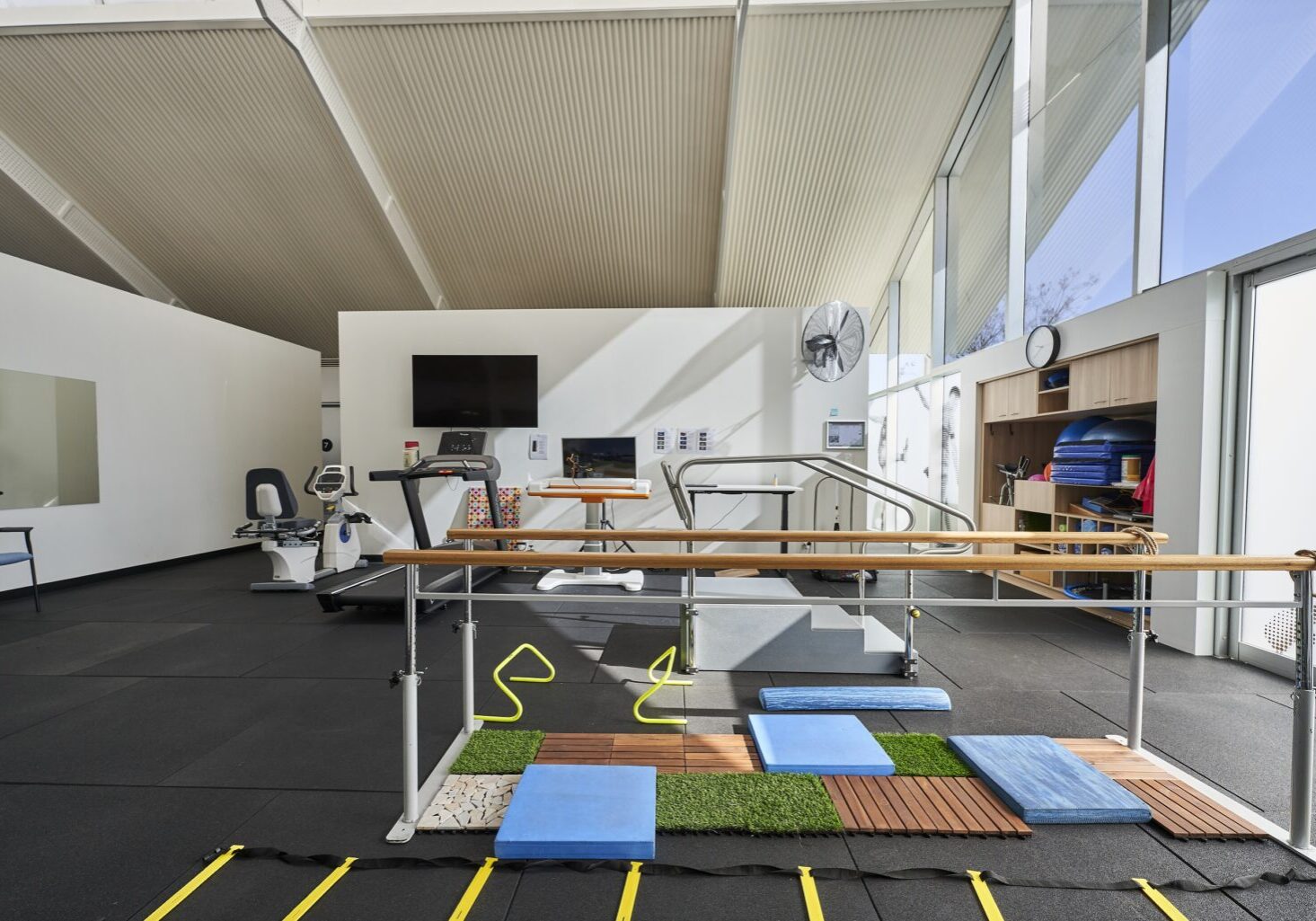
Task specific training, meaning practising the actual thing you want to recover rather than a general exercise. Walking retraining. Balance and falls prevention. Upper limb work, which is often where the most persistent difficulty sits. Strength and cardiovascular conditioning, because deconditioning after stroke is severe and very treatable. Spasticity management. Equipment and home setup. And a home programme, which is where most of the volume happens.
Why the volume matters more than the appointments
Research on stroke rehabilitation consistently points the same way: more repetitions produce more recovery. A session or two a week with a physiotherapist cannot supply the volume the brain needs on its own.
What those sessions should do is assess, teach the right task at the right difficulty, and progress it. Then the work happens daily at home. A physiotherapist who does not give you a home programme is giving you a fraction of the available recovery.
Where family fits
Family often become the people who supervise the daily practice, and that is a substantial role. We teach it explicitly, including safe transfers, how to set up a task, when to help and when not to, and how to progress things safely.
That last one matters. Helping too much reduces the challenge, and the challenge is what drives the change.
What we do
Assessment and treatment at our Eastwood clinic, at home across Adelaide, or by telehealth. Home visits are often better for stroke rehabilitation because we can work with the actual steps, doorways and bathroom the person uses.
Our team includes physiotherapists with over 20 years in adult neurological rehabilitation, and one of our physiotherapists also works with Northern Adelaide’s Rehabilitation Service.
NDIS registered. Call 08 8331 2700.
